John Morris
October 10, 2013
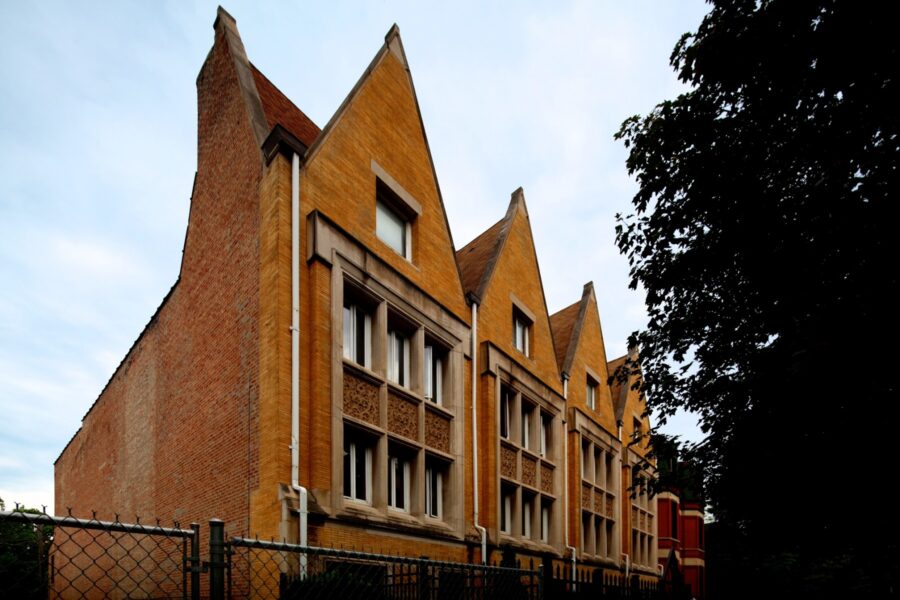
The Roloson row houses on Calumet Avenue on the South Side are a set of four attached units with dramatic front gables. Designed by Frank Lloyd Wright in 1894, they represent a transition period in his career. These houses were one of Wright’s earliest commissions–only one year after leaving Louis Sullivan’s firm.
If you look past the gables and window patterns, you might think these houses are similar to others in the neighborhood. However, a closer inspection reveals a subtle understanding of fractal geometry and visually appealing proportion.
Continue reading »
John Morris
June 24, 2013
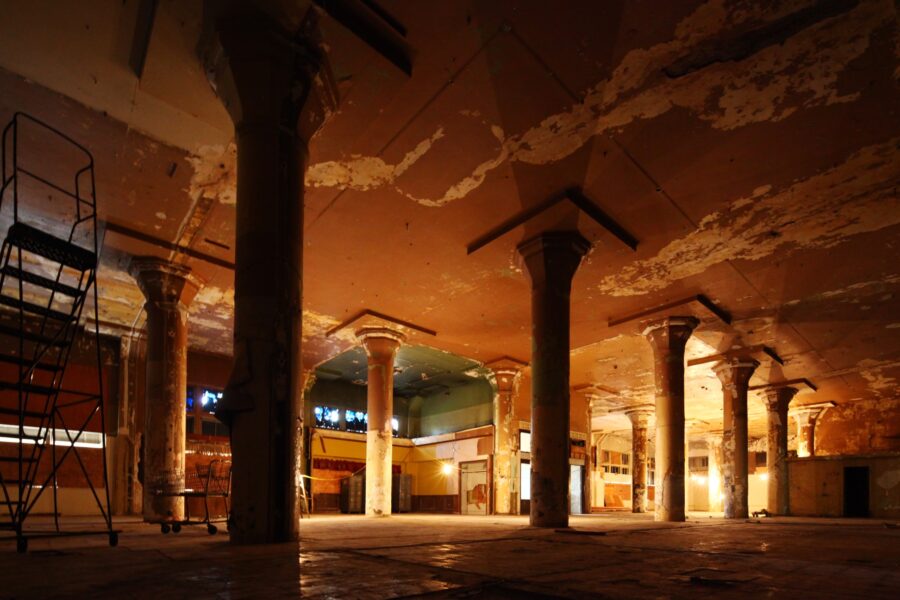
A few weeks ago we looked at the history of an ornate shuttered factory in Washington Park, the Schulze Baking Company building (interior above). While the structure has been vacant for several years, it will soon live again serving an industry that initially seems unlikely for the South Side: information technology.
But before examining what’s taking place there and elsewhere on the South Side, let’s look at the data center landscape and why much of the future growth will take place in Chicago.
Continue reading »
John Morris
May 16, 2013
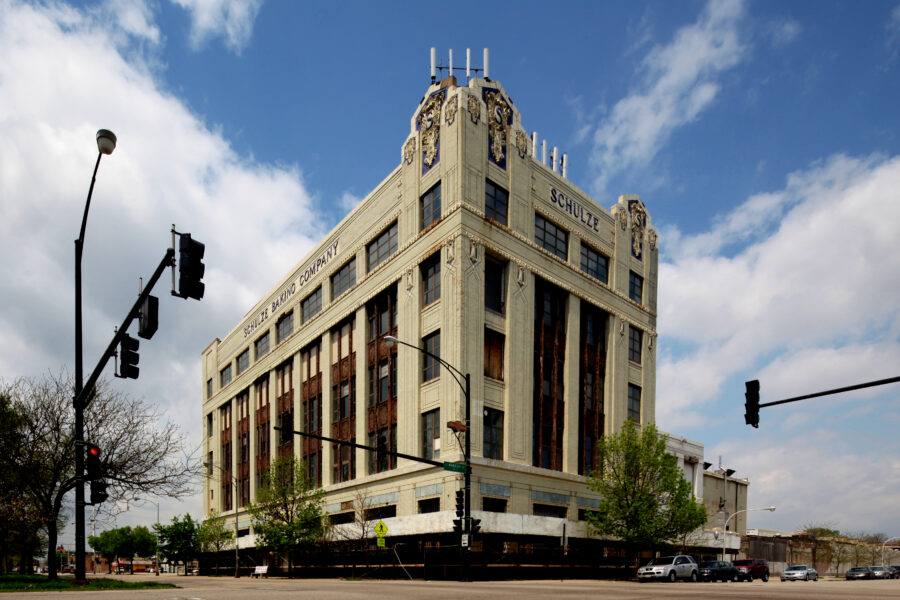
UPDATE 07/01: We explore the future of this building in the article The South Side’s New Industry: Data Centers.
A few blocks away from Chicago’s oldest CTA station is the Schulze Baking Company building. This terra-cotta beauty stands tall and weathered, in an area that has seen better days. For almost a century the site was bustling bread baker, but the plant was shut down in 2004. It is now vacant and lined with scaffolding to protect pedestrians from falling debris.
Continue reading »
John Morris
May 1, 2013
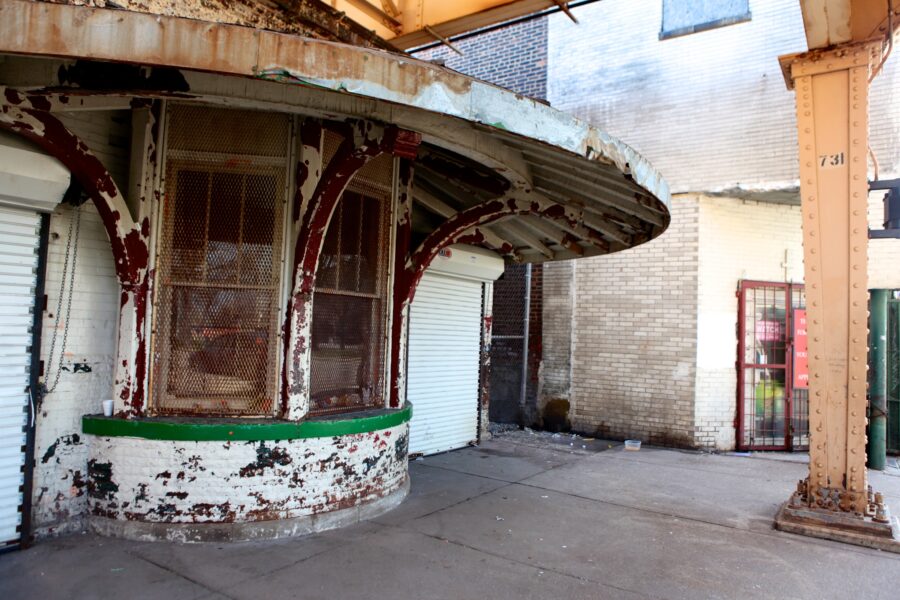
Hidden in Washington Park on the South Side is a small Victorian building that is the oldest standing public transit structure in Chicago, and probably the the United States. It was built to connect downtown with the 1893 World’s Columbian Exposition in Jackson Park.
Continue reading »